
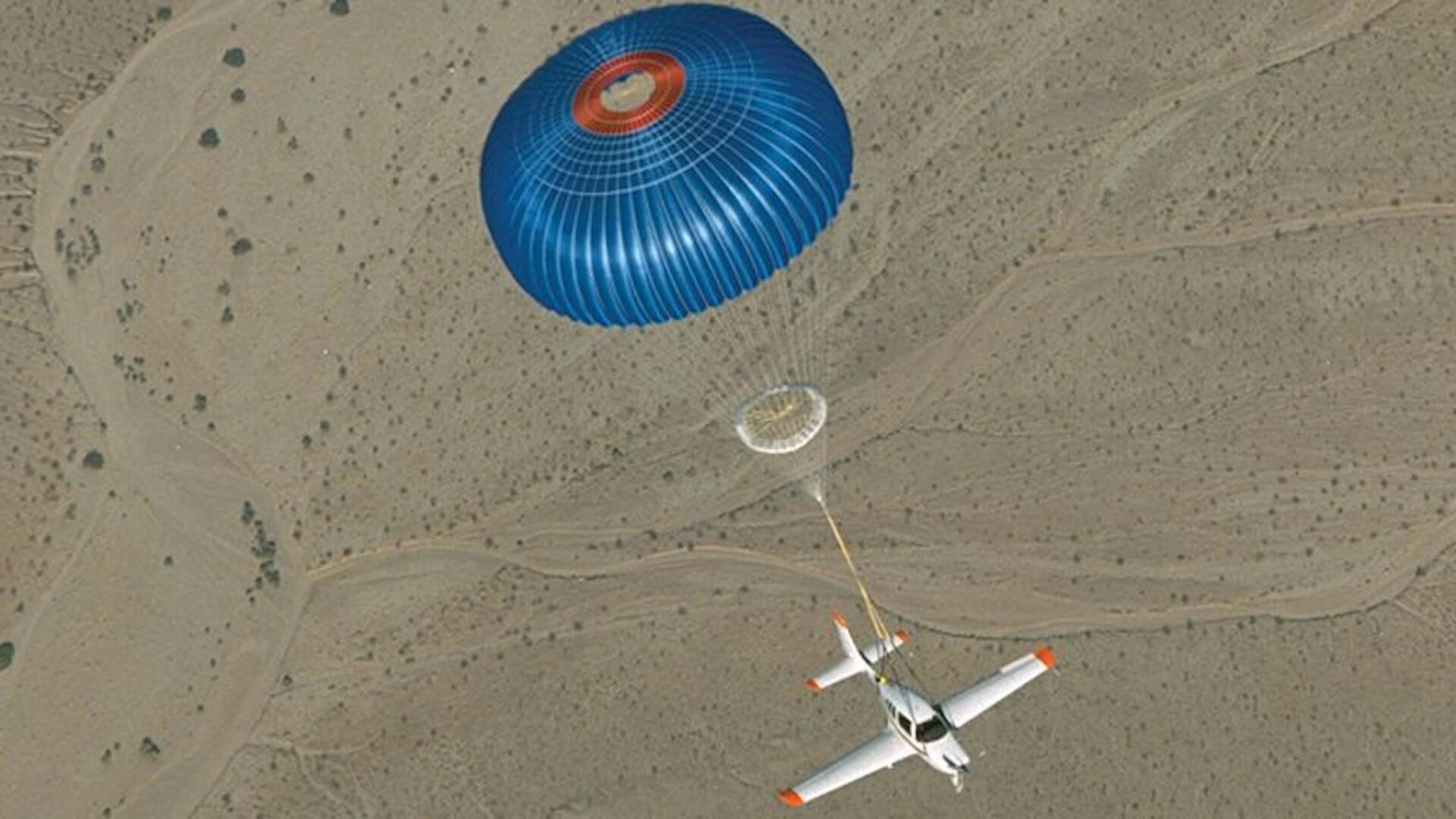
As new innovations enter the market, these tend to be implemented in larger aircraft first and then trickle down to the smaller end of the market. This is not the case with aircraft ballistic recovery systems – aircraft parachutes – which lend themselves to smaller aircraft, both from a certification and structural integration perspective.
Ballistic recovery systems are not new; they were introduced in the 1980s. They were more recently implemented in Cirrus aircraft as the Cirrus Airframe Parachute System (CAPS) and are therefore more visible in the market. Their increasing visibility has also driven broader industry discussion around their operational use, training implications and human factors considerations.
As of December 2025, Cirrus Aircraft claim 144 CAPS ‘saves’ with 290 survivors – that’s impressive. No one can sensibly claim they are not a safety feature. While not a substitute for sound airmanship, they provide an additional safety barrier when other options have been exhausted, particularly in medium-altitude or loss-of-control scenarios.
Within EASA pilot licensing legislation, see Part-FCL (Flight Crew Licensing). FCL.710 requires that a pilot undertake either ‘familiarisation’ or ‘differences’ training when faced with flying a variant within a class or type. The associated Guidance Material, GM1 FCL.710, defines ‘familiarisation training’ as the acquisition of additional knowledge, for example by studying the manufacturer’s accompanying literature, whereas ‘differences training’ requires both the acquisition of additional knowledge and training on an appropriate training device or the aircraft itself.
Earlier Guidance Material associated with FCL.700 recommends that Differences Training be undertaken for variants including variable-pitch propellers, turbo- or supercharged engines, cabin pressurisation, tailwheel, electronic flight instrument systems (EFIS), single-lever power control and retractable undercarriage, but remains silent on ballistic recovery systems – leaving it to the manufacturer to advise pilots. Given the nature of ballistic recovery systems, a single-action, irreversible intervention, this absence is noteworthy.
The smart money recommends initial training, followed by a 90-day refresher (after 90 days of operational experience, not a 90-day duration), and then recurrent training every six months. This reflects the reality that, unlike many aircraft systems, a ballistic recovery system is one the pilot hopes never to use, yet must be prepared to deploy decisively and without hesitation.
The recommended syllabus includes basic knowledge and human factors, muscle memory, decision-making and deployment procedures. In particular, emphasis should be placed on:
- Understanding system limitations (minimum deployment heights, airspeed envelopes and post-deployment considerations)
- Recognition of scenarios where deployment is appropriate
- Overcoming hesitation or “startle factor”
- Clear verbal call-outs and crew coordination, where applicable
The recommended practical training is scenario-based and should include:
- Engine failure on take-off
- Engine failure with no runway within glide distance
- Engine failure over a runway
- Engine failure at night or in IMC
- Spin recovery
- Severe icing encounter
- Mid-air collision
- Loss of control
- Structural failure
These scenarios are not intended to encourage premature deployment, but rather to define decision gates, when to continue troubleshooting and when to commit to parachute activation.
Of course, it goes without saying that the training should be pre-briefed, with the emphasis on ‘touch drills’. The development of muscle memory is critical; the physical act of reaching, gripping and pulling must become instinctive. In high-stress situations, fine motor skills degrade and hesitation costs altitude.
The Pilot’s Operating Handbook / Flight Manual (POH/FM) provides useful information related to different scenarios, but the depth of the material illustrates very clearly the difference between ‘familiarisation training’ and ‘differences training’. Reading the POH/FM should be considered ‘familiarisation training’ and, in the case of ballistic recovery technology, a precursor to ‘differences training’, both initial and refresher.
Ballistic recovery systems represent a significant safety innovation. However, as with any safety feature, their effectiveness ultimately depends not just on installation, but on understanding, training and disciplined decision-making.