 Drones aren’t niche anymore. You can buy one on Amazon. You can gift one at Christmas. You can be airborne in your local park within the hour.
That accessibility is impressive. It’s also part of the problem.
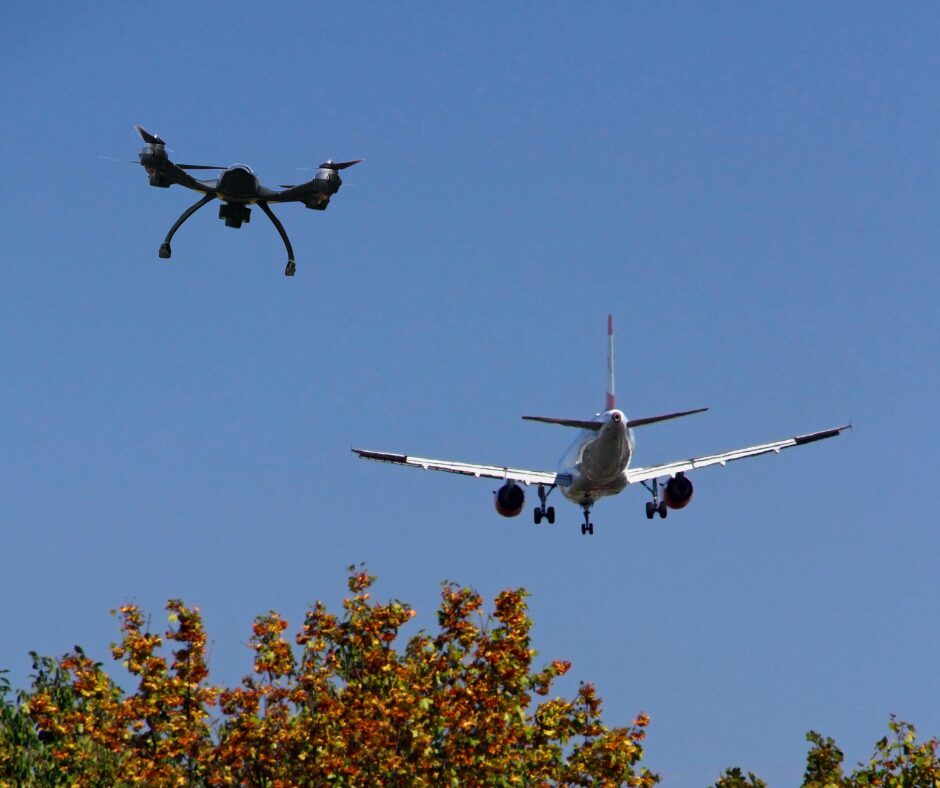
The UK CAA has been increasing its focus on drone regulation, and not without reason. As drones become cheaper and easier to fly, we’re seeing more of them where they simply shouldn’t be: close to controlled airspace, near aerodromes, and sometimes at the same level as departing or arriving aircraft.
And increasingly, the motivation is social media.
The Instagram effect
There’s no denying it, dramatic aviation footage performs well online.
A wide-body rotating against a sunset. A low approach over rooftops. A departure shot taken at what looks like eye level.
The problem? To capture that kind of footage, you often need to be in airspace that belongs to someone else. In controlled airspace (CAS), air traffic control (ATC) relies on the airspace being a known traffic environment, meaning all the traffic operating in the area is ‘known’. Operating an unknown drone in the known traffic environment without clearance undermines safety!
In some cases, drone operators position themselves directly under approach paths or climb-out areas. From the ground, it might feel distant and controlled. From the cockpit, it’s an unknown object in critical airspace.
And pilots don’t get the luxury of assuming it’s harmless.
This isn’t just “annoying”, it’s operationally disruptive
When a drone is reported near an airport, the consequences aren’t small:
- Departures can be delayed
- Arrivals may need to hold or divert
- ATC workload increases
- Police and airport resources are mobilised
All because someone wanted a better angle.
The Gatwick disruption in 2018 showed how significant the impact can be. But even smaller, shorter-lived sightings create ripple effects across tightly managed airspace.
Commercial aviation runs on predictability. Introducing unknown objects into that system removes it.
The perception gap
Many recreational drone users don’t see themselves as part of the aviation ecosystem.
They’re hobbyists. Content creators. Tech enthusiasts.
But the moment a drone leaves the ground, it becomes an aircraft, sharing airspace with other aircraft. That’s not a philosophical point. That’s a legal and operational reality.
The rise of social platforms has amplified this gap. The reward (views, likes, subscribers) is immediate. The risk feels abstract.
Until it isn’t.
The CAA’s position
The CAA’s tightening oversight isn’t about spoiling a hobby. It’s about protecting controlled airspace.
Registration requirements, competency tests, and geo-fencing technology: these measures exist because the density of both drones and commercial traffic has increased.
The skies are busier than ever. Airspace discipline matters more than ever.
A training perspective
From a training point of view, this raises an interesting challenge:
How do we prepare pilots for hazards that aren’t always visible on radar, aren’t always squawking, and aren’t always predictable?
Drone encounters aren’t theoretical anymore. They’re part of the modern threat environment.
At the same time, there’s a broader question for the industry:
Are we doing enough to communicate that flying a drone isn’t just a gadget hobby, it’s participation in shared airspace?
Shared responsibility
Technology isn’t the enemy. Drones have enormous commercial and creative value.
But accessibility without understanding is where risk creeps in.
Airspace isn’t just open sky. It’s structured, protected and managed for a reason.
And as drones become more common, respecting that structure becomes everyone’s responsibility, not just the CAA’s.