The aviation industry has always been sensitive to global events, but few regions matter quite as much as the Middle East. Sitting at the crossroads between Europe, Asia and Africa, it plays a huge role in keeping global air travel moving. So when tensions rise there, the effects don’t stay local for long.
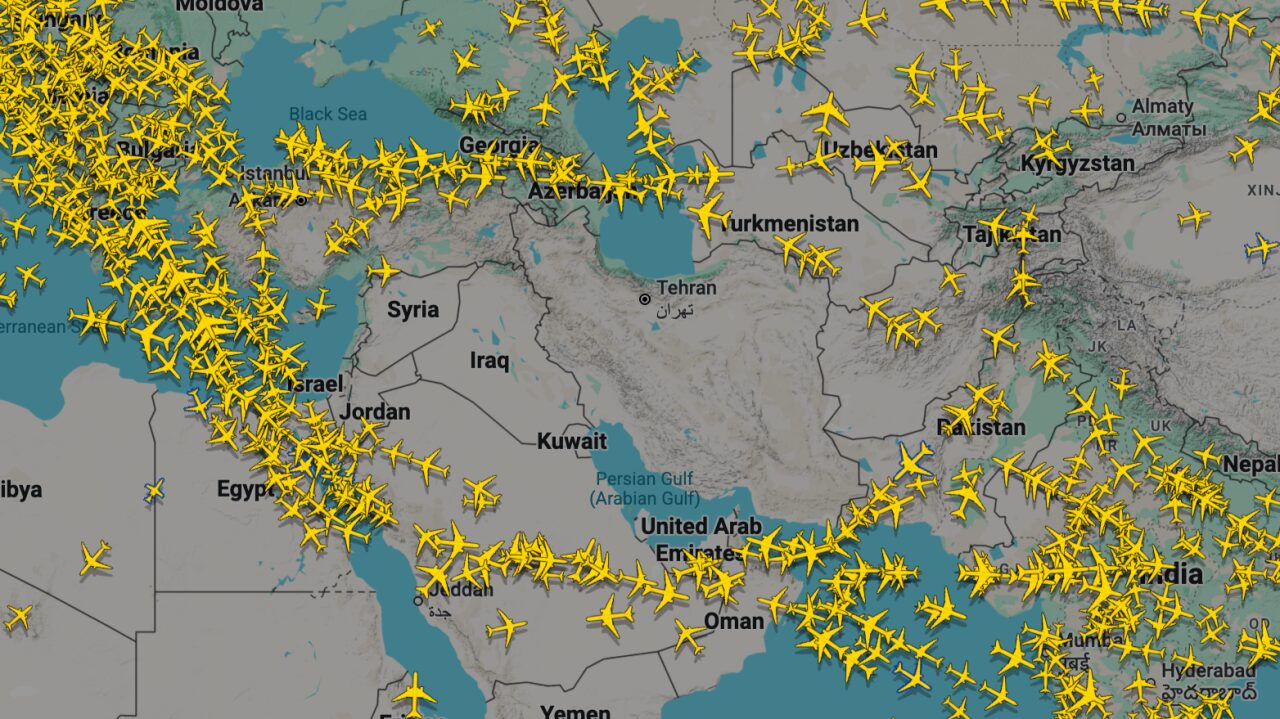
More recently, with the latest escalation in the region, those effects have become much more immediate and visible. Airlines have had to react quickly, sometimes overnight, and while most people notice the obvious signs, such as longer flight times, cancellations, and rising fares, there’s a quieter shift happening underneath it all that’s just as important: it’s beginning to reshape how pilots are trained and how new pilots enter the industry.
One of the biggest changes has been airspace. Once routine routes are no longer available, at least not consistently. Airlines are having to reroute flights around restricted or high-risk areas, which often means longer sectors and more crowded corridors elsewhere.
For pilots, that brings a different kind of workload. It’s not just about flying a planned route anymore; it’s about constantly adapting. Airspace restrictions can change quickly, diversions become more likely, and alternates aren’t always the familiar ones. Decision-making becomes more dynamic, and there’s less room to rely purely on routine.
Fuel is another piece of the puzzle. Any instability in the Middle East tends to feed directly into oil prices, and aviation feels that almost immediately. As fuel costs rise, airlines start looking closely at where they can manage spending. Training, unfortunately, often sits in that category. We’re already seeing signs of slower recruitment, delayed cadet programmes, and a bit more caution around long-term training commitments.
That creates a slightly strange situation. The industry still needs pilots, that hasn’t changed, but in the short term, things can feel less certain. For someone training now, or thinking about starting, it can feel like the timing is off, even though the long-term demand is still there in the background.
At the same time, the type of training pilots need is starting to shift. Scenarios that might once have felt rare, like rerouting due to geopolitical risk, operating around restricted airspace, and making fuel-critical decisions on longer routes, are becoming more relevant. Training is gradually reflecting that. There’s more focus on scenario-based exercises, handling uncertainty, and making decisions when things don’t quite go to plan.
In a way, it’s making training more realistic. The job itself is becoming less predictable, so the way pilots are prepared for it has to evolve as well.
There’s also the question of where training happens. The Middle East has long been a major hub for aviation, not just for airlines but for training too. If instability continues, some of that activity could shift or spread out more globally. It doesn’t mean the region loses its importance, but it may change where opportunities are concentrated and how accessible they are.
What’s interesting is that none of this really points to a weaker industry in the long run. Aviation has always adapted to disruption. But the adjustment period can feel uneven, and it’s often those at the beginning of their careers who feel it most.
For aspiring pilots, the takeaway isn’t that opportunities are disappearing; it’s that the environment is changing. The expectations are shifting slightly. Technical skill remains at the core, but there’s a growing emphasis on adaptability, awareness, and comfort with decision-making in uncertain situations.
That’s probably the biggest change of all. The current situation in the Middle East isn’t just affecting flight paths; it’s influencing how pilots think, how they’re trained, and what’s expected of them once they’re in the cockpit.
And in an industry built on precision and planning, that move towards adaptability might end up being one of the most important developments to come out of all of this.