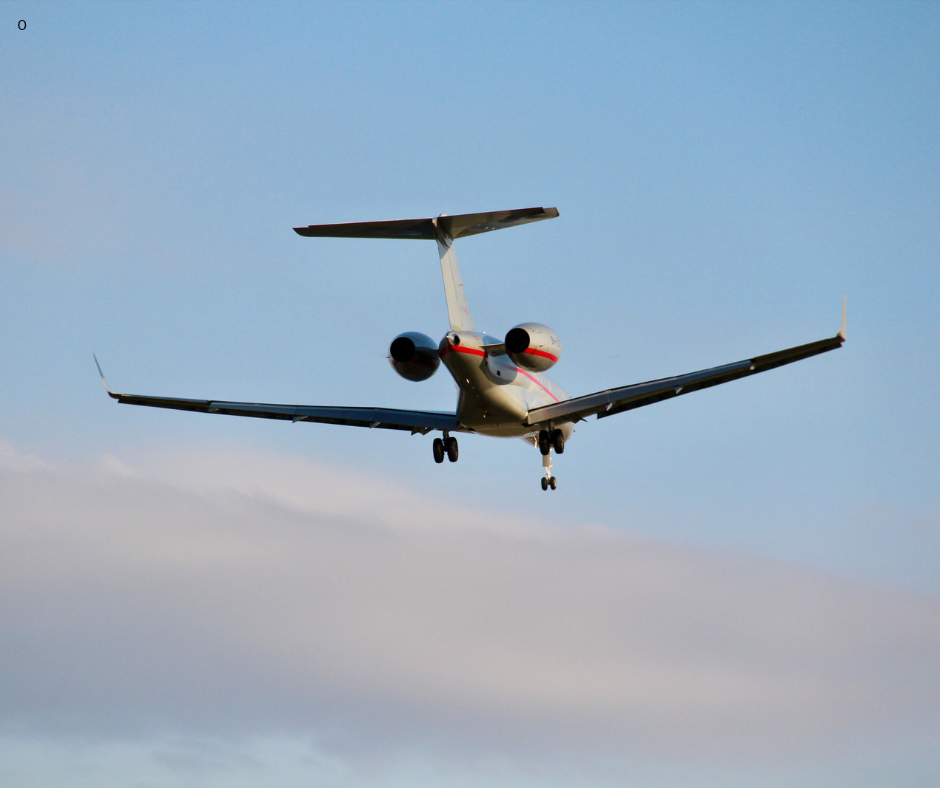
At high altitude, relatively small changes in airspeed can have significant aerodynamic consequences.
The recent Learjet 60 accident in Florida has drawn attention to the challenges of high-altitude flight. Reports of a rapid descent from approximately 35,000 ft also raise an important question: what happens to an aircraft’s aerodynamic behaviour if it accelerates towards its high-speed limits?
One phenomenon pilots need to understand is Mach tuck – a nose-down pitching tendency that can develop as an aircraft approaches the transonic speed range.
During a steep descent, an aircraft may accelerate rapidly. If its Mach number increases sufficiently, compressibility effects can alter the airflow around the aircraft and produce changes in pitching moment.
There is no established evidence that Mach tuck occurred during the Learjet accident, and the cause remains under investigation. However, the reported descent provides a useful starting point for exploring why high-speed aerodynamics matter.
What causes Mach tuck?
As an aircraft accelerates, airflow over parts of its wing can reach the speed of sound even while the aircraft itself is travelling below Mach 1.
The aircraft’s critical Mach number is the lowest free-stream Mach number at which airflow first reaches Mach 1 somewhere on the aircraft.
At higher Mach numbers, localised supersonic airflow can develop, followed by shock waves that cause sudden changes in pressure. These shock waves may also trigger airflow separation.
As the pressure distribution changes, the wing’s centre of pressure can move rearwards, producing a nose-down pitching moment.
This tendency is known as Mach tuck. Changes in airflow around the tailplane can also contribute, depending on the aircraft’s design.
Why can Mach tuck become a problem?
The concern is that a nose-down pitching tendency may lead to further acceleration.
If the aircraft pitches down and gains speed, compressibility effects may become more pronounced, potentially increasing the nose-down tendency.
At high altitude, pilots must also consider the narrowing margin between low-speed and high-speed aerodynamic limits.
This makes accurate speed management especially important, particularly during turbulence or an unexpected descent.
Mach tuck versus Mach buffet
Although both are associated with high-speed flight, Mach tuck and Mach buffet describe different effects.
Mach tuck is a change in pitching tendency, typically towards nose-down, caused by compressibility-related changes in the aircraft’s aerodynamics.
Mach buffet is vibration or shaking associated with shock-wave-induced airflow separation.
An aircraft can experience high-speed buffet without necessarily developing significant Mach tuck. The exact behaviour depends on its aerodynamic design.
How do aircraft manage Mach tuck?
High-speed aircraft are designed to reduce or compensate for compressibility effects.
Wing sweep, aerofoil design and tailplane configuration all influence an aircraft’s behaviour as Mach number increases.
Some aircraft also use automatic Mach trim systems to help compensate for changes in longitudinal pitching moment.
Pilots must observe the aircraft’s maximum operating Mach number (MMO) and maximum operating speed (VMO). Which limit is more restrictive depends on altitude and aircraft type.
If an aircraft approaches its operating limits, the correct response is to follow the manufacturer’s approved procedures rather than rely on a general recovery technique.
What should ATPL students remember?
Mach tuck is an important topic within ATPL Principles of Flight because it demonstrates that increasing speed does more than increase aerodynamic forces – it can change their distribution and affect aircraft stability.
The key concepts are the critical Mach number, shock-wave formation, movement of the centre of pressure and the resulting pitching moment.
For pilots operating high-performance aircraft, understanding these effects is essential to managing speed safely, particularly at high altitude.
The key lesson: an aircraft’s behaviour can change significantly as it approaches the transonic speed range, making knowledge of aerodynamic limitations just as important as knowing the numbers on the airspeed indicator.