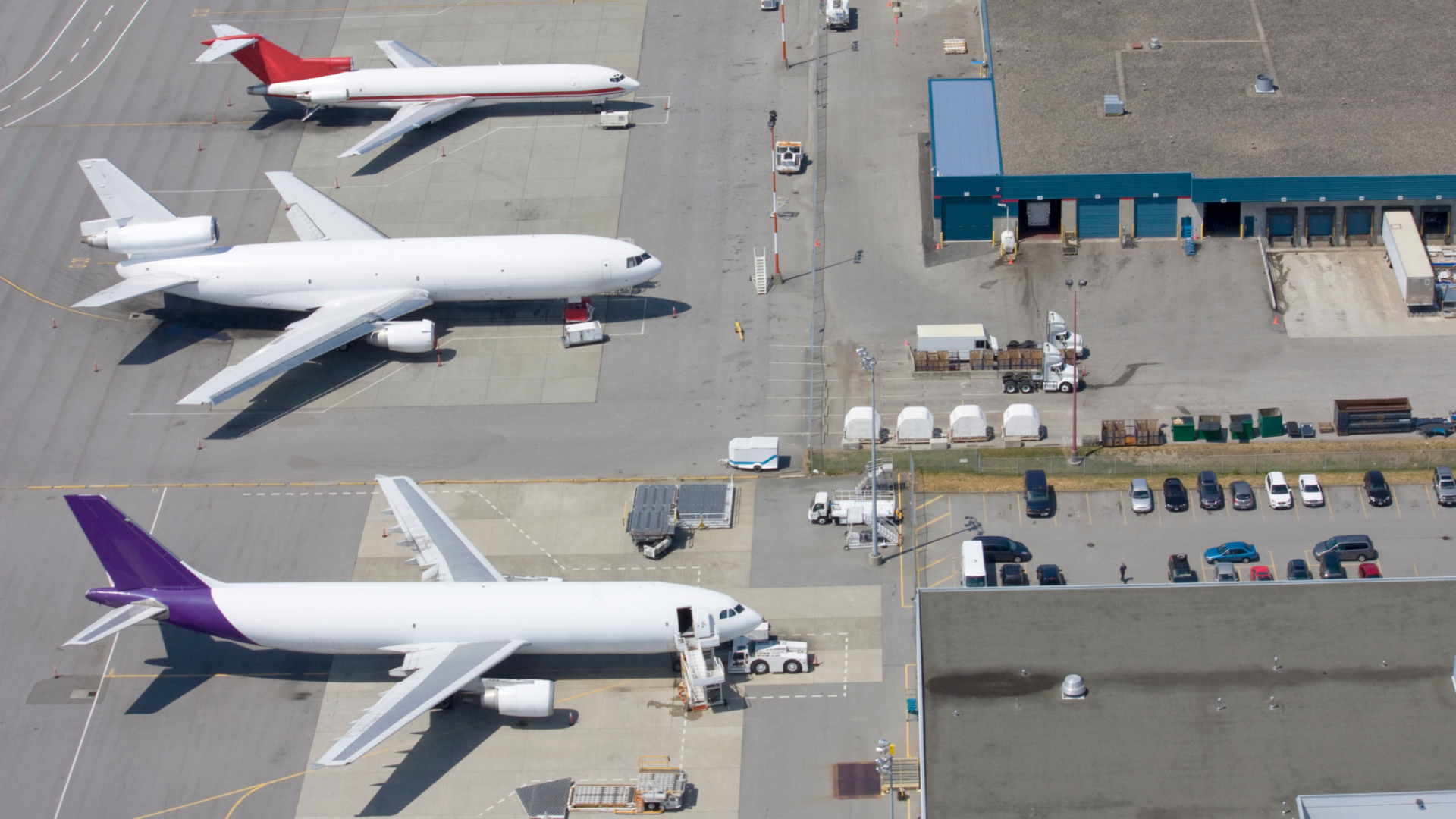
 On 13 November 2026, the Federal Aviation Administration (FAA) issued a nationwide ground stop across the United States after technical problems disrupted parts of its air traffic control (ATC) communications network.
Approximately 3,500 aircraft were already airborne when the ground stop was introduced. Although some radio frequencies and radar feeds remained operational, the disruption was significant enough for the FAA to suspend departures as a precaution.
The incident raises an important question for pilots: what happens when communication with ATC becomes unreliable or is lost altogether?
What caused the disruption?
According to the FAA, its ageing telecommunications infrastructure became unstable when excessive data traffic flooded the network, affecting aircraft communications and radar information.
The initial investigation identified two possible sources of the problem, including a communications site in Arkansas where technology company L3Harris had been carrying out equipment work involving a new router.
The work formed part of the transition from older copper-based telecommunications systems to modern digital infrastructure. The precise cause of the disruption remains under investigation.
The FAA’s En Route Automation Modernization (ERAM) system is another important part of US air traffic control. It processes surveillance and flight data, helping controllers monitor aircraft and manage traffic across en-route airspace.
However, ERAM should not be confused with the telecommunications network involved in the disruption. ERAM provides controllers with information, while the communications infrastructure helps transmit the data and voice communications on which ATC depends.
What does NORDO mean?
In aviation, NORDO means no radio and is commonly used to describe an aircraft that cannot establish two-way radio communication.
An ATC network disruption does not automatically mean every aircraft becomes NORDO. During the FAA incident, some communications remained available, allowing controllers to continue coordinating with aircraft.
Nevertheless, a loss of radio contact is a situation every pilot must be prepared to manage.
What should a pilot do if radio contact is lost?
If a pilot cannot contact ATC, the first priority is to establish whether the problem is with the aircraft’s equipment, the selected frequency or the ground communications system.
Depending on the circumstances and aircraft equipment, the crew may:
- Check the radio settings, audio panel and available communications equipment.
- Try the previously assigned frequency or another appropriate ATC frequency.
- Attempt contact on the emergency frequency, 121.5 MHz.
- Use another aircraft to relay a message or alternative communications equipment where available.
- Select transponder code 7600 when the applicable radio-failure procedures require it.
If communication cannot be restored, the crew must follow the relevant lost-communications procedures.
These depend on the applicable rules, whether the aircraft is operating under visual flight rules (VFR) or instrument flight rules (IFR), and the conditions encountered.
For example, European Standardised European Rules of the Air (SERA) procedures specify actions for radio failures, including the use of code 7600 and different requirements for VFR and IFR flights.
In the United States, IFR lost-communications procedures are addressed under 14 CFR § 91.185.
Pilots must therefore know the procedures applicable to their flight, rather than assume that one set of rules applies everywhere.
Why does this matter for ATPL students?
The FAA ground stop demonstrates how dependent modern aviation is on reliable communications and the infrastructure supporting air traffic control.
It also highlights an important distinction: a failure affecting ATC’s ground network is not necessarily the same as an aircraft experiencing a complete radio failure.
For ATPL students, the event connects directly to Air Law, Communications and Operational Procedures.
Understanding transponder codes, alternative communication methods and the appropriate lost-communications procedures is essential preparation for situations in which normal contact with ATC cannot be maintained.
Technology plays a major role in keeping aircraft safely separated, but when systems become unreliable, established procedures and sound decision-making remain vital.