Runway incursions are one of those topics that show up early in training and never really go away. They’re briefed, tested, and talked about often enough that it’s easy to feel like we’ve got them covered.
And yet, they still keep happening.
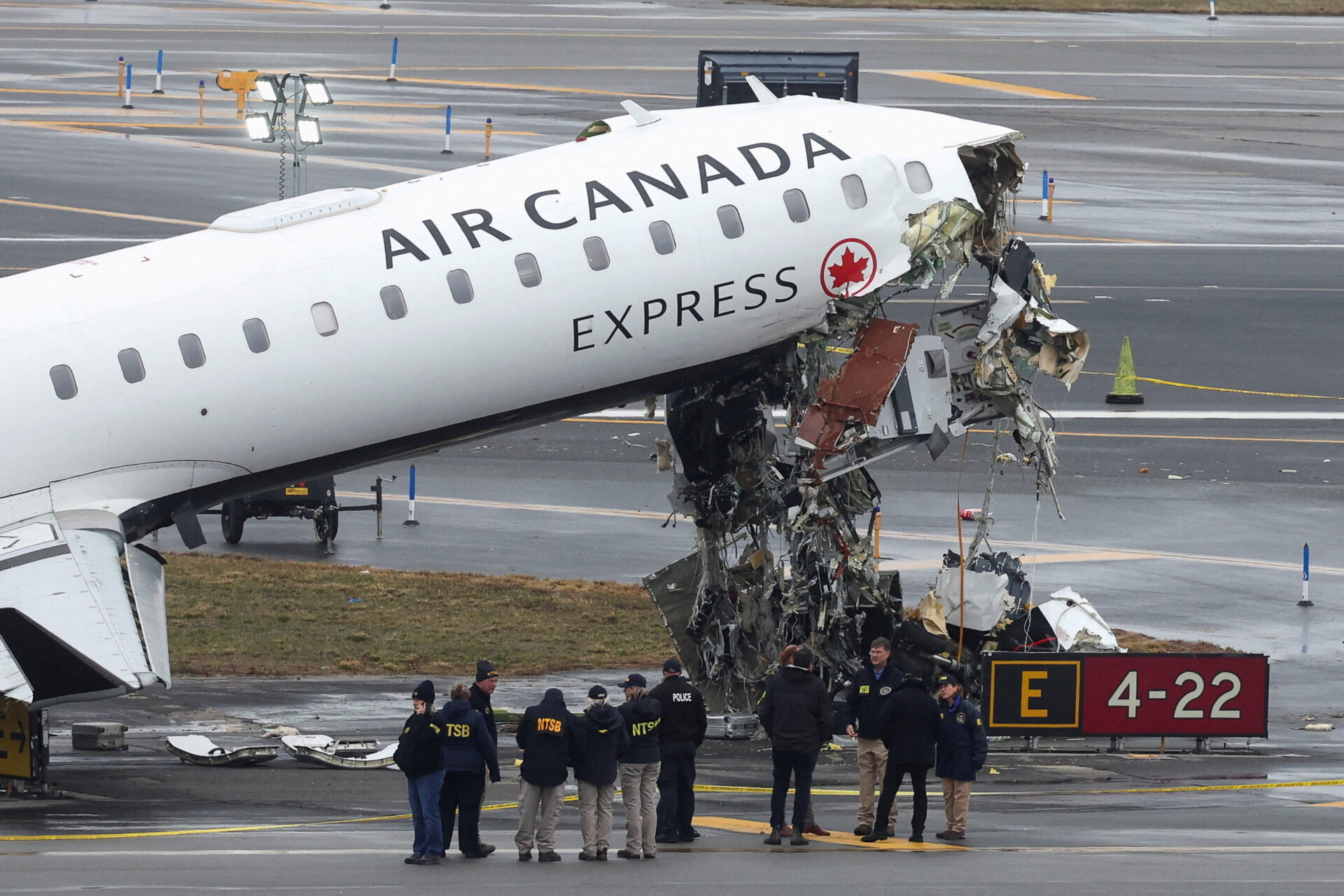
The recent Air Canada accident at LaGuardia is a reminder of that. An aircraft on landing collided with a vehicle on the runway, something that sits right at the centre of modern runway safety defences. It’s exactly the kind of scenario the system is designed to prevent.
So it’s worth asking how, despite all of that, two things can still end up in the same place at the same time.
From what we know so far, this wasn’t a quiet, routine operating environment. There were other factors in play on the airfield, including a vehicle responding to a separate situation. That in itself isn’t unusual, but it does start to change the picture. Workload increases, priorities shift, and things become a little less predictable than a standard arrival sequence.
At the same time, the aircraft was doing what crews do every day. Stabilised, configured, and cleared to land. From the cockpit, everything would have been pointing in one direction: to continue, land, and bring the flight to a normal conclusion.
The ATC audio adds an interesting layer to that picture. In the final seconds, a controller can be heard urgently calling for a vehicle to stop, a last attempt to resolve a conflict that had already developed. It’s a short exchange, but it gives a sense of how late the situation became apparent and how little margin was left by that point.
What’s perhaps less obvious is how much these situations depend on how runway movements are managed in the first place.
Different regulatory environments take slightly different approaches. Some favour stricter separation, keeping runways clear of any conflicting movements before the next clearance is issued. Others allow more flexibility, relying on sequencing, timing and coordination to keep everything moving safely.
Both approaches are effective and are used safely every day. But they rely on different assumptions about how that safety margin is maintained.
In a more dynamic system, that margin depends heavily on everything happening in the right order. When it does, operations flow efficiently. When something disrupts that sequence, even slightly, the buffer can reduce very quickly.
From the cockpit, none of that complexity is necessarily visible. A landing clearance reinforces the expectation that the runway ahead is clear, and most of the time, that expectation is correct. But as this accident shows, a clearance is still based on a moment in time, and in a more complex situation, that moment can pass quickly.
By the time something doesn’t look right, you’re already close to the ground, with limited time and limited options.
It’s easy to see this as something specific to large, high-pressure airports, but what it really highlights is how much these situations depend on the way the system itself is structured. When operations rely on precise sequencing and coordination, the margin is maintained by everything happening as expected, and when it doesn’t, that margin can be reduced very quickly.
That’s why runway incursions sit less in the category of knowledge, and more in mindset. Staying engaged when things feel routine, continuing to look even when you’ve been cleared, and being willing to question something that doesn’t quite fit the picture.
There’s still a lot we don’t know, and the final report will be key in understanding exactly how this unfolded. But even at this stage, it starts to point towards a wider question around how runway operations are managed, particularly in more dynamic environments.
It’s probably a discussion best had with the full facts on the table, but it’s one that’s already beginning.