 Over the past few weeks, there have been a number of aviation incidents that, on the surface, don’t appear to have much in common.
An Air Canada aircraft collided with a vehicle on the runway at LaGuardia, and more recently, two Southwest aircraft came dangerously close in Nashville, requiring evasive action to maintain separation. At the same time, there have been increasing reports of GNSS interference across parts of Europe.
On paper, they’re very different situations.
But look at them a little more closely, and a similar theme starts to emerge.
In each case, separation, whether on the ground or in the air, isn’t being maintained through simple, fixed spacing. It’s being managed dynamically. Through timing, coordination, and sequencing. A system that works extremely well most of the time, and allows for efficient, high-capacity operations.
Until something doesn’t quite line up.
The Air Canada accident brought that into focus on the ground. A runway that should have been clear wasn’t, and by the time the conflict became apparent, there was very little margin left to resolve it. The details will take time to fully understand, but even at this stage, it’s clear how quickly that buffer can disappear.
The Nashville incident shows a similar idea in the air. Two aircraft, both operating normally, both under control, but still requiring last-minute action to maintain separation. Again, not a dramatic failure of a single component, but a situation where the system needed everything to happen in the right order and for a moment, it didn’t.
What stands out across both events is that they don’t appear to be the result of a single failure. Instead, they reflect a sequence, a combination of factors that, on their own, might have been manageable, but together reduced the available margin.
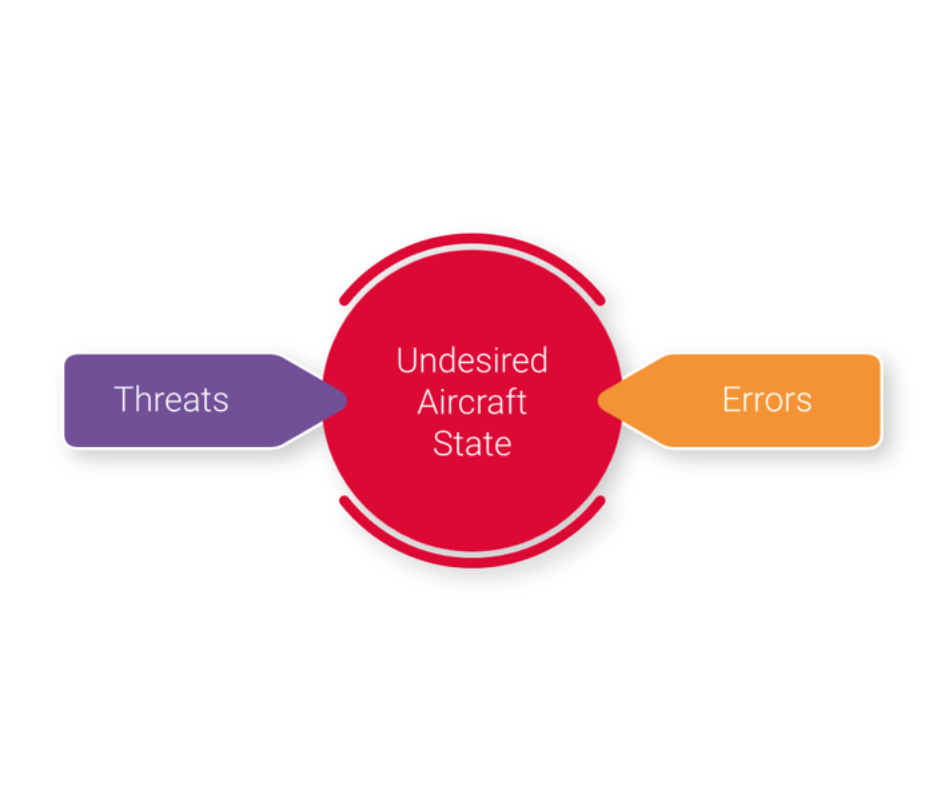
Aviation has long recognised that safety depends on multiple layers of defence, something we teach through concepts like Threat and Error Management and the Swiss Cheese model. Most of the time, those layers work exactly as intended. But when several small gaps begin to align, whether through workload, timing, or system design, the buffer between normal operation and something more serious can narrow very quickly.
There are also emerging issues that, while not directly linked to these events, point in a similar direction. Increasing reports of GNSS interference across parts of Europe highlight how much modern operations rely on accurate positioning to maintain predictability. If that becomes less reliable, even subtly, it has the potential to reduce the margin the system depends on.
What ties all of this together is not the specific cause, but the way the system is designed.
Modern aviation doesn’t rely purely on physical separation. It relies on predictability. Aircraft where they’re expected to be, when they’re expected to be there. Controllers and pilots working within a shared picture that is, most of the time, highly accurate.
That predictability is what allows the system to operate efficiently. But it also means that when something deviates, whether it’s a vehicle on a runway, a misunderstanding in communication, or degraded navigation accuracy, the buffer can quickly reduce.
And when that buffer reduces, there isn’t always much time to recover.
None of this is to suggest that aviation is becoming less safe. If anything, the opposite is true. But it does point towards a shift in how risk presents itself. Less about obvious, isolated failures, and more about how well the system copes when small disruptions occur within an already complex environment.
There’s still a lot we don’t know about the individual events, and the final reports will be key in understanding exactly what happened in each case.
But taken together, they do start to raise a broader question.
Not just about what went wrong in one instance, but about how much margin exists within the system when everything is working as expected and how quickly that margin can change when it isn’t.