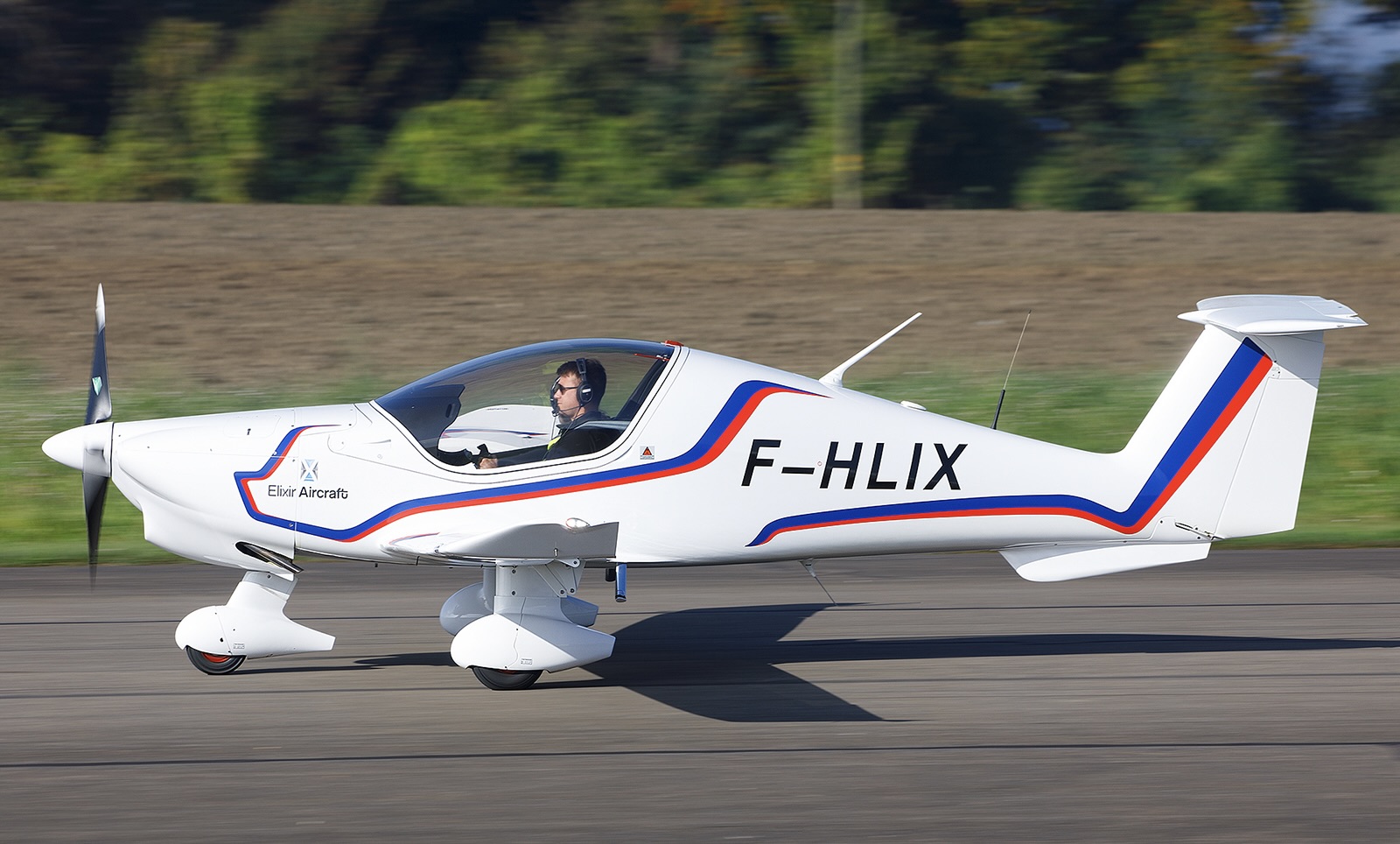
On 2 October 2026, the European Union Aviation Safety Agency (EASA) issued an emergency airworthiness directive suspending flight operations for all Elixir aircraft. The decision followed a fatal accident involving an Elixir aircraft in France the previous day.
The accident occurred on 1 October 2026 near Rochefort–Charente-Maritime Airport, where two pilots lost their lives during a production test flight. According to information released by the French Bureau of Enquiry and Analysis for Civil Aviation Safety (BEA), the aircraft’s left flap detached during a low-height circuit. The pilot lost control, and the aircraft collided with the ground despite deployment of its emergency parachute.
With the investigation ongoing, EASA took the precautionary decision to suspend operations across the entire aircraft type.
But why would an aviation regulator ground every aircraft of a particular type following a single accident? And what does this tell student pilots about airworthiness and aviation safety?
What is an airworthiness directive?
An airworthiness directive (AD) is a legally enforceable instruction issued by an aviation authority to address an identified unsafe condition affecting an aircraft, engine, propeller or other aviation product.
Aircraft must meet airworthiness requirements before they are permitted to fly. However, obtaining an initial certificate of airworthiness does not mean that an aircraft will remain airworthy indefinitely.
Throughout an aircraft’s operational life, manufacturers, operators and maintenance organisations continually monitor its performance and condition. Occasionally, inspections, maintenance findings or incidents reveal safety concerns that were not previously identified.
When an unsafe condition is identified and is likely to exist or develop in other aircraft of the same type, an aviation authority may issue an AD requiring corrective action.
Depending on the nature of the problem, an AD might require an inspection, a component replacement, a modification or a change to operating procedures.
Compliance is mandatory within the specified timescale.
Why was the Elixir aircraft grounded?
The Elixir is a two-seat, single-engine aircraft developed in France and designed for applications including flight training.
Following the fatal accident on 1 October 2026, Elixir Aircraft issued an alert service bulletin concerning the fleet.
EASA subsequently issued Emergency AD 2026-0191-E on 2 October 2026, which became effective on 3 October 2026.
The directive suspended flight operations for all Elixir aircraft while the circumstances surrounding the accident were investigated and the continued airworthiness of the fleet assessed.
Importantly, grounding an aircraft type does not necessarily mean that every aircraft has a confirmed defect.
It means that the available evidence raises sufficient concern about a potentially shared unsafe condition that continued operations cannot be justified until the risk has been adequately addressed.
In this case, the cause of the accident remains under investigation. The emergency directive is a precautionary safety measure, rather than a final conclusion about what caused the accident.
What makes an emergency airworthiness directive different?
Not every airworthiness directive requires an aircraft to be grounded.
In many cases, an AD provides operators with a specified period in which to complete the necessary corrective action. This might involve carrying out an inspection within a certain number of flight hours or replacing a component before a particular date.
The compliance period depends on the severity and urgency of the safety concern.
An emergency airworthiness directive is issued when an unsafe condition requires particularly urgent action.
EASA can issue these directives without the usual consultation period when immediate intervention is considered necessary.
In the most serious circumstances, where a potential safety risk cannot be adequately controlled through an inspection, operating limitation or other immediate corrective measure, suspending flight operations may be the safest option.
The Elixir grounding demonstrates this principle in practice.
Rather than allowing aircraft to continue operating while the investigation progressed, EASA required the fleet to remain on the ground pending appropriate corrective action.
Airworthiness does not end with certification
For ATPL students, this incident provides a useful connection to the Air Law syllabus.
An aircraft’s initial certification demonstrates that its design meets the applicable requirements at the time of approval. However, continued safe operation depends on maintaining that standard throughout its service life.
This is known as continuing airworthiness.
Continuing airworthiness involves a range of activities, including scheduled maintenance, inspections, defect rectification, compliance with mandatory directives and the monitoring of aircraft condition.
Responsibility is shared between aircraft manufacturers, operators, maintenance organisations and aviation authorities.
The manufacturer may identify a potential problem and issue technical instructions, while the aviation authority determines whether mandatory action is required.
This is also where the distinction between a service bulletin and an airworthiness directive becomes important.
A service bulletin is issued by a manufacturer to provide technical information or instructions. An AD is issued or adopted by an aviation authority and makes specified actions legally mandatory.
Although service bulletins can become mandatory through other requirements, they are not automatically equivalent to an AD.
What happens when an aircraft type is grounded?
For an operator or flight training organisation, the consequences can be immediate.
Aircraft affected by a directive suspending flight operations cannot simply continue flying because they appear serviceable or have recently passed a maintenance inspection.
The operator must comply with the applicable directive before returning the aircraft to service.
For a flight training school, this could mean cancelling or rescheduling lessons, reviewing aircraft availability and adjusting training programmes.
Maintenance personnel must also determine which aircraft are affected, what actions are required and whether the conditions for returning them to service have been satisfied.
Where the cause of a safety concern has not yet been fully established, the authority may issue further instructions as additional information becomes available.
This is why operators must monitor airworthiness publications and ensure that applicable directives are incorporated into their continuing airworthiness arrangements.
What can student pilots learn from this incident?
Airworthiness is sometimes viewed as a subject primarily concerned with maintenance engineers and aircraft operators.
However, pilots also have an important role.
Before flight, a pilot must be satisfied that the aircraft is legally and technically suitable for the intended operation. This includes checking the aircraft’s documentation, maintenance status and any applicable operational limitations.
The Elixir grounding also highlights an important distinction between an aircraft that appears mechanically serviceable and one that is legally airworthy.
An aircraft might start normally, pass its pre-flight inspection and show no obvious signs of a defect. However, if an applicable AD prohibits flight, it must remain on the ground.
For students studying Air Law and Aircraft General Knowledge, the incident demonstrates why regulatory requirements are directly relevant to operational safety.
It also reinforces a wider principle: aviation safety depends not only on the actions of individual pilots, but on a system designed to identify, assess and manage risks across the entire industry.
Safety sometimes means staying on the ground
Grounding an entire aircraft type is an unusual and significant decision. It can disrupt operators, affect training schedules and create considerable practical challenges.
However, when a potential unsafe condition may affect multiple aircraft, taking precautionary action can prevent further accidents while the risk is investigated.
The decision to suspend Elixir operations demonstrates how aviation authorities can respond rapidly to emerging safety concerns, even before an investigation has reached its final conclusions.
For aspiring pilots, it is a valuable reminder that airworthiness is not simply a certificate or a maintenance requirement. It is an ongoing process that helps ensure an aircraft remains safe to operate throughout its life.
Understanding that process is an important part of learning to think like a professional pilot.