
Certain airports pose unique challenges that demand pilots to undergo specialised training. While pilots receive comprehensive training to navigate various scenarios in routine flight operations, there are airports where not every pilot can confidently land. This challenge stems from factors such as treacherous terrain, exceptionally short runways, and high altitudes, making safe landings a complex endeavour.
Successfully navigating these demanding airports requires pilots with specific qualifications and advanced training. This blog will explore some of the most formidable airports globally, where landing safely necessitates a level of expertise beyond the ordinary.
Lukla Airport, Nepal

Nepal’s Lukla Airport stands in the shadows of the world’s highest mountain, Mount Everest. Renowned as the gateway for tourists aspiring to conquer Everest, Lukla Airport is a vital entry point to the region. However, its geographical location presents a set of formidable challenges for pilots.
Positioned over 9,000 feet above sea level, Lukla Airport is nestled between two mountains, making the terrain and high altitude alone demanding for aircraft operations. The true test comes with the airport’s unidirectional runway, a mere 1,600 feet in length. This limited space leaves no room for pilot error. On one end of the runway looms a mountain wall, while the other end plunges into a valley, creating a perilous scenario for landing.
FlightRadar24.com data highlights that Yeti Airlines is the sole operator, connecting Kathmandu’s Tribhuvan International Airport to Lukla on a daily basis. The flights deploy de Havilland Twin Otter aircraft, showcasing the need for specialised planes to navigate Lukla’s challenging conditions.
Paro Airport, Bhutan
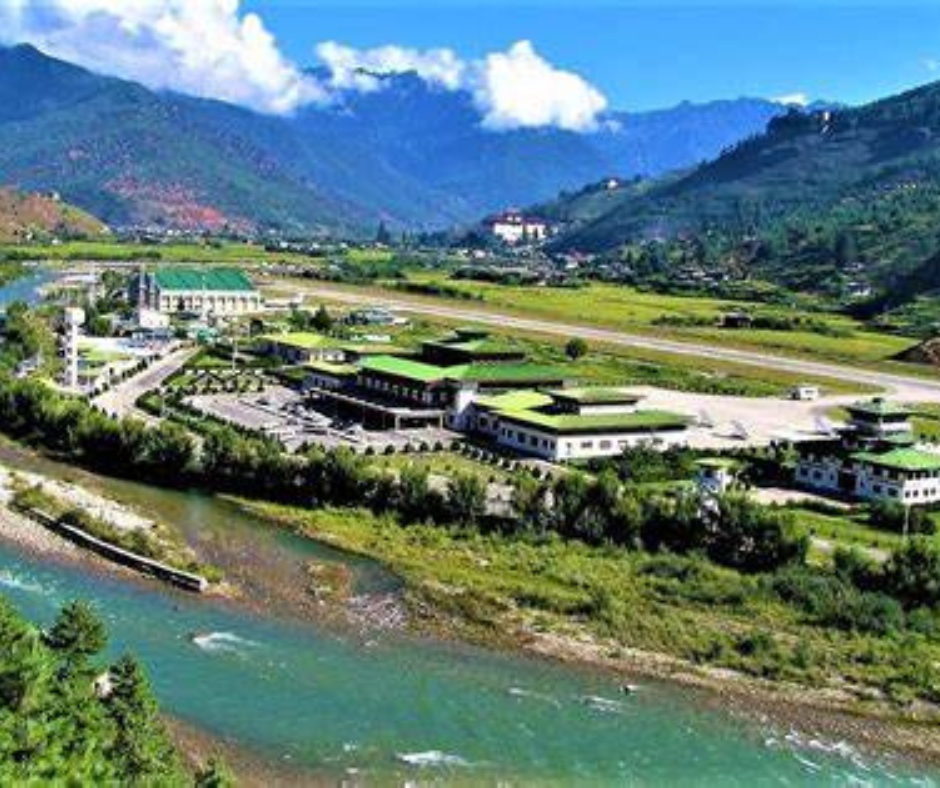
Paro International Airport in Bhutan is another very difficult runway to land on. There are mountains soaring to 18,000 feet which it restricts visibility until moments before landing. Adding to the complexity, there is no radar service available for aircraft.
Consequently, flights into Paro are restricted to daylight hours. Pilots tackling the approach to Paro must rely on manual navigation using a series of landmarks. Precision is paramount as they navigate through obstacles, with some certified pilots executing a 45-degree angle descent before swiftly landing on the runway.
FlightRadar24.com data reveals that two airlines, Druk Air and Bhutan Airlines, operate flights to Paro using smaller passenger jets like the Airbus A319 and the Airbus A220. This indicates a strategic approach to deploying aircraft capable of handling the challenges presented by Paro’s unique topography.
Courchevel Airport, France
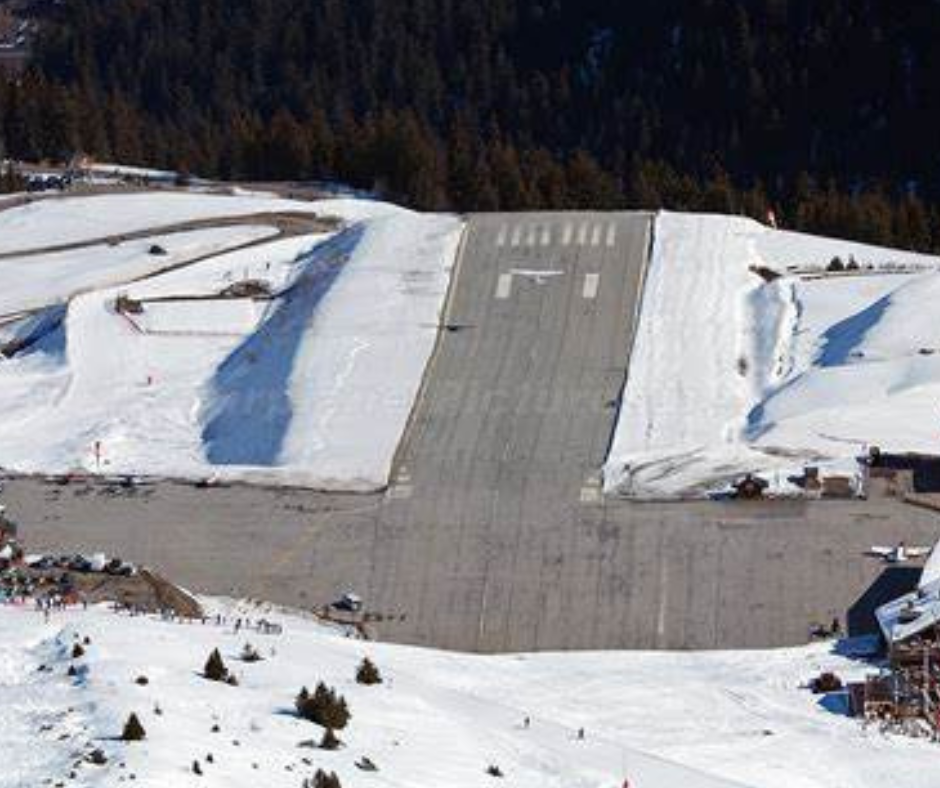
Nestled in the French Alps, Courchevel Airport presents a different set of challenges. While its elevation exceeds 6,500 feet, the primary hurdle is its runway. Measuring a mere 1,700 feet and featuring a daunting 18.5% downward gradient, pilots must execute precise landings on their first attempt.
Complicating matters, the absence of lights or instrument aids makes landings impossible during adverse weather conditions, a common occurrence in the mountainous surroundings.
Although smaller General Aviation aircraft frequent Courchevel, the exclusive license for commercial flights is held by Alpine Airlines. Operating Vulcanair AVIATOR TP 600 and Vulcanair P68 OTC Observer aircraft, the airline caters to both commercial and charter passenger flights, including sightseeing missions across European countries.
Funchal Cristiano Ronaldo Airport, Portugal
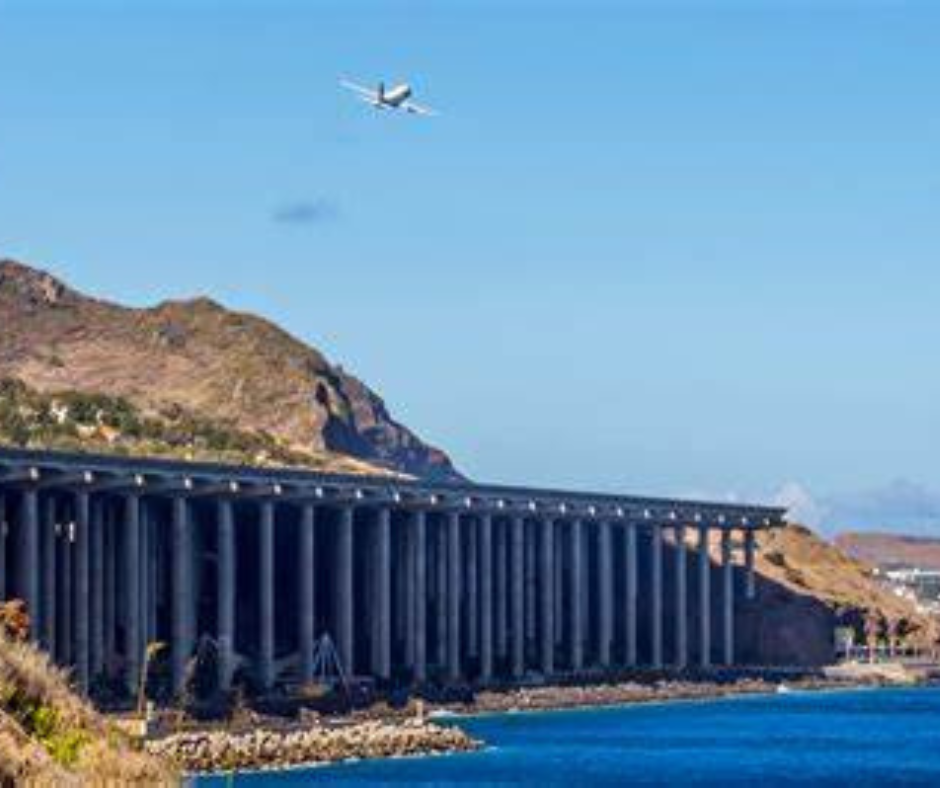
Located on the picturesque island of Madeira, Funchal Cristiano Ronaldo Airport may not seem as hazardous as its mountainous counterparts. Nevertheless, its coastal positioning exposes aircraft to constant heavy winds and gusts. The runway, parallel to the coastline, subjects flights to significant crosswinds due to the daily cycle of sea and land breezes.
Pilots operating in and out of Funchal undergo special training to navigate these challenging wind conditions. Additionally, the airport contends with mountain waves, causing turbulence that affects specific approach and climb-out procedures. Despite expansions, including a runway extension supported by 180 pillars over 50 metres high, Funchal Cristiano Ronaldo Airport remains categorised as a challenging Category C airport.
Saba Airport, Dutch Caribbean

Saba Airport, situated in the Dutch Caribbean, boasts the title of having the shortest commercially usable runway globally, measuring just 1,312 feet. However, due to displaced runway thresholds on either side, the total usable length shrinks to 1,263 feet.
Operating in close proximity to the sea, pilots face the dual challenge of the extremely short runway and heavy crosswinds. Landings at Saba require precise manoeuvres, including steep descents and late flares. Take-offs mimic carrier-style procedures, demanding maximum engine power at the threshold and a swift release of brakes for accelerated take-off. Remarkably, since its establishment in 1963, Saba Airport has maintained an impeccable safety record with no recorded incidents or accidents.
Narsarsuaq Airport, Greenland
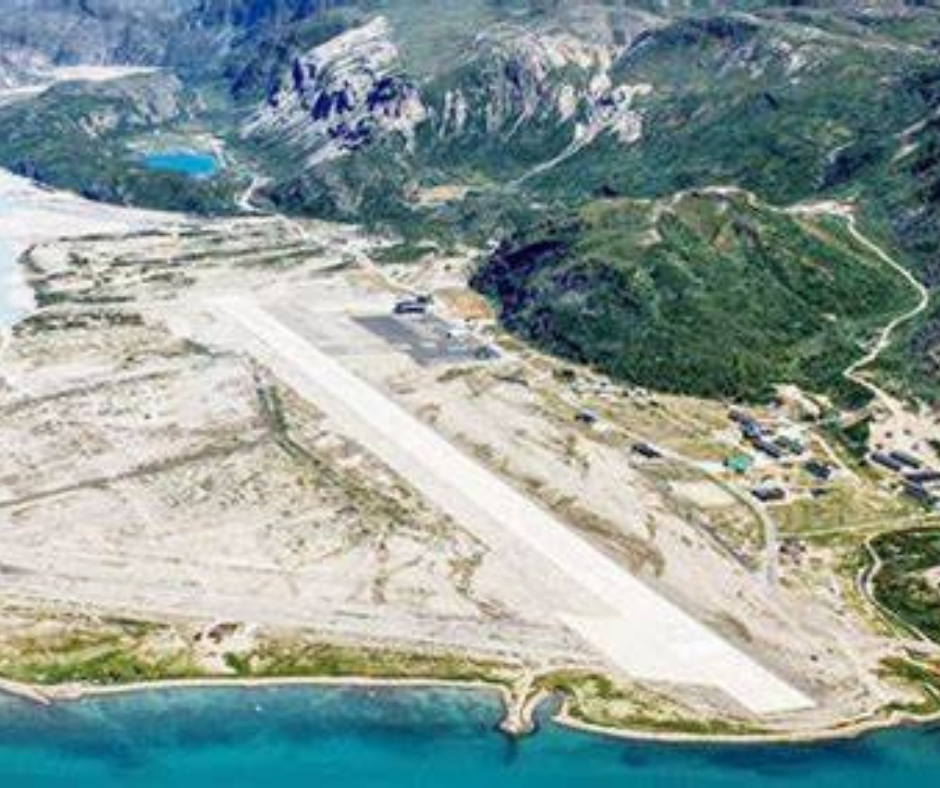
Greenland’s Narsarsuaq Airport, positioned in the southern part of the country, contends with a range of challenging environmental factors. With an elevation of just over 100 feet, the airport is surrounded by fjords, exposing it to gusty winds from various directions.
Weather conditions, including low-level fog, pose visibility challenges for pilots. Moreover, the airport faces the impact of low temperatures, leading to frozen runways or snow cover, both threatening aircraft operations. The region’s susceptibility to volcanic activities adds another layer of complexity, potentially causing ash clouds that compromise both visibility and aircraft safety.
Each of these airports demands a unique set of skills and adaptations from pilots, showcasing the intricate dance between human expertise and environmental challenges in the world of aviation.
Read next blog: Modular training: Should I do my CPL or IR first?