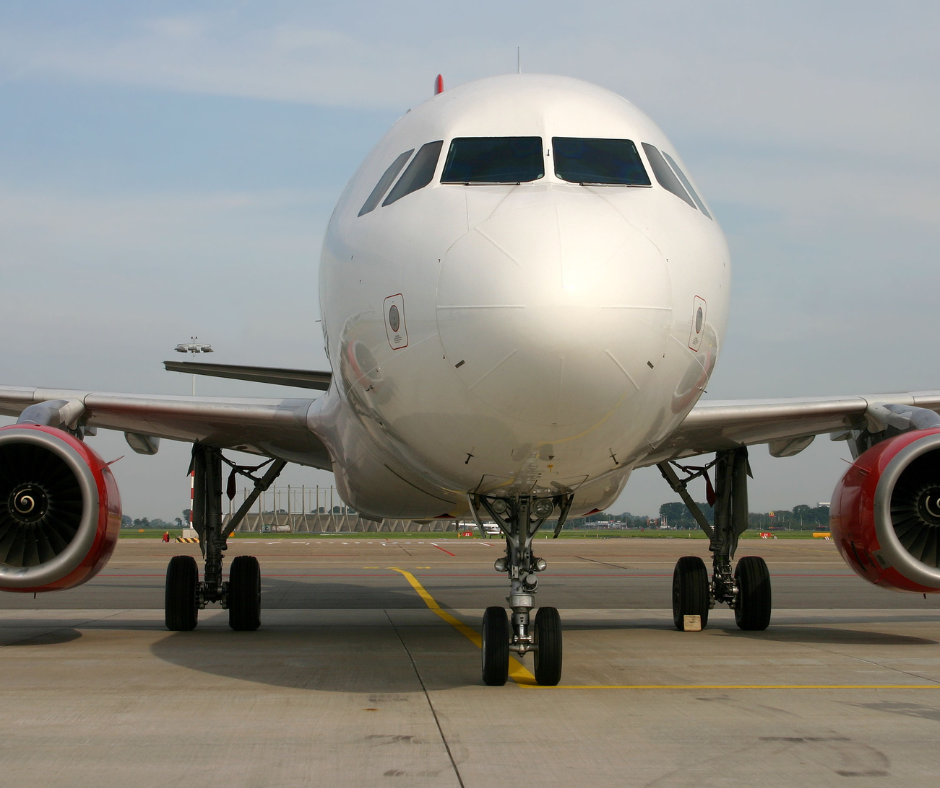
On 9 October 2026, an Avianca Airbus A320 operating a flight from Medellín, Colombia, to New York encountered severe turbulence, forcing the crew to divert to Miami International Airport.
The turbulence was serious enough to injure several people on board. According to the airline, six passengers and three crew members were affected, with emergency services meeting the aircraft after it landed safely in Miami.
The incident is a reminder that turbulence remains a significant hazard in aviation, even with modern forecasting technology and sophisticated aircraft systems.
For student pilots, it also raises an important question: if pilots have access to detailed weather forecasts, weather radar and reports from other aircraft, why can severe turbulence still occur unexpectedly?
The answer lies in understanding how turbulence forms, how it is forecast and the limitations of the information available to pilots.
What causes turbulence?
Turbulence occurs when an aircraft encounters irregular or disturbed airflow. Rather than moving through a smooth, consistent airstream, the aircraft experiences changes in the speed or direction of the surrounding air.
These disturbances can cause changes in the aircraft’s attitude, altitude and vertical acceleration. Depending on their intensity, the effects can range from minor discomfort to significant difficulties maintaining control.
There are several causes of turbulence, including:
- Convective turbulence associated with thunderstorms and strong vertical air currents
- Mechanical turbulence caused by airflow passing over buildings, terrain or other obstacles
- Mountain wave turbulence associated with airflow over mountainous terrain
- Wake turbulence generated by other aircraft
- Clear-air turbulence associated with wind shear and strong wind gradients, often near jet streams
For pilots, recognising the conditions associated with each type is an important part of flight planning and meteorological awareness.
What is clear-air turbulence?
Clear-air turbulence (CAT) is particularly challenging because it can occur without the visible cloud formations that pilots might normally associate with turbulent conditions.
It is commonly found at higher altitudes, particularly in areas where there are strong changes in wind speed or direction.
One important location is near jet streams.
Jet streams are relatively narrow bands of strong winds found near the tropopause. Significant changes in wind speed and direction can occur around their boundaries, creating vertical and horizontal wind shear.
Under suitable atmospheric conditions, this shear can generate turbulent airflow.
Unlike turbulence associated with thunderstorms, clear-air turbulence may occur in apparently clear skies.
This makes it particularly difficult to identify visually.
However, clear-air turbulence should not automatically be assumed to be the cause of every unexpected turbulence encounter. The specific atmospheric conditions responsible for the Avianca incident have not yet been established in the reporting available.
Can pilots predict turbulence?
To an extent, yes.
Meteorologists can identify atmospheric conditions associated with an increased likelihood of turbulence. Forecasting models analyse factors such as wind speed, wind shear, temperature gradients, atmospheric stability and jet stream position.
These forecasts help pilots and flight planners identify areas where turbulence may be encountered.
However, forecasting turbulence is not the same as predicting its exact location, intensity and timing.
Turbulence can be highly localised, and atmospheric conditions may change over relatively short distances.
A forecast may indicate an increased risk of turbulence across a particular area without identifying precisely where the most severe conditions will occur.
This is why pilots must continually update their understanding of the weather throughout a flight rather than relying solely on the information available before departure.
What can weather radar detect?
Modern commercial aircraft are equipped with weather radar systems that help pilots identify areas of precipitation, particularly those associated with convective activity.
Weather radar transmits electromagnetic pulses and analyses the signals reflected by precipitation particles.
Areas of significant precipitation can indicate potentially hazardous convective weather, allowing crews to plan routes around thunderstorms.
However, airborne weather radar does not directly detect turbulence.
Conventional weather radar primarily detects precipitation rather than the movement of clear air. Although some systems have additional turbulence detection capabilities in suitable precipitation conditions, they cannot reliably detect all forms of turbulence.
This is particularly important when considering clear-air turbulence, which may occur without significant precipitation.
An aircraft can therefore be flying through apparently clear skies, with little or no weather radar return, and still encounter turbulence.
For ATPL students studying meteorology and aircraft instrumentation, this highlights an important principle: every system has limitations, and pilots must understand what the information presented to them actually represents.
The importance of SIGMETs and turbulence forecasts
Weather radar is only one source of information available to pilots.
Significant meteorological information (SIGMET) messages are issued to warn aircraft of specified weather phenomena that may affect the safety of flight.
These can include severe turbulence, severe icing, thunderstorms and other significant meteorological hazards.
A SIGMET provides information about the location, extent, movement and expected duration of the hazardous conditions.
Pilots can use this information when planning a flight or assessing whether a change of route or altitude may be necessary.
Other sources of information include significant weather charts, upper wind forecasts, meteorological briefings and reports from other aircraft.
Pilot reports can be particularly valuable because they provide observations of conditions actually experienced in flight.
However, even with these resources, turbulence cannot always be avoided completely.
Forecasts describe expected atmospheric conditions, while actual conditions may differ.
This is why in-flight monitoring and effective decision-making remain essential.
Why seat belts matter
One of the most serious consequences of unexpected turbulence is the risk of injury to passengers and crew.
During severe turbulence, an aircraft can experience rapid changes in vertical acceleration.
Anyone who is not properly restrained may be thrown from their seat or against the cabin interior.
The aircraft itself may remain within its structural and operational limits, while people inside the cabin experience significant forces.
This is why passengers are advised to keep their seat belts fastened whenever seated, even when the seat belt sign is switched off.
For cabin crew, the risk can be particularly significant because their duties frequently require them to move around the aircraft.
Pilots must therefore consider not only the effects of turbulence on aircraft handling, but also the safety of everyone on board.
When turbulence is expected, crews may suspend cabin service, instruct passengers to remain seated and ensure cabin crew are secured.
Unexpected turbulence can leave little time to take these precautions, reinforcing the importance of effective communication and preparation.
Why might a crew decide to divert?
Following the turbulence encounter on 9 October 2026, the Avianca crew diverted to Miami rather than continuing to New York.
A diversion following severe turbulence may be necessary for several reasons.
The crew may need to arrange medical assistance for injured passengers or crew members. There may also be a requirement to assess the aircraft for possible damage or determine whether continuing the flight is appropriate.
Operational considerations such as weather, fuel, airport suitability and the availability of emergency services may influence the decision.
In the Avianca incident, the airline described the diversion as a precautionary measure in accordance with its safety procedures.
The exact considerations behind the crew’s decision have not been fully detailed in the available reporting.
Nevertheless, the incident provides a useful example of how a flight can change significantly after departure.
For ATPL students, this demonstrates the relationship between meteorology, operational procedures, flight planning and human performance.
The ability to recognise a developing situation, assess the available options and make an appropriate decision is an essential part of professional flying.
What can student pilots learn from this incident?
Turbulence is a familiar topic within the ATPL Meteorology syllabus, but incidents such as this demonstrate why understanding the underlying theory matters.
It is not enough to know that turbulence can occur near jet streams or thunderstorms. Pilots must also understand how to interpret forecasts, recognise hazardous conditions and respond when the actual weather differs from expectations.
The Avianca incident highlights several important principles.
First, forecasting is a tool for managing risk rather than eliminating it. Even detailed meteorological information cannot guarantee that an aircraft will avoid every area of turbulence.
Second, pilots must understand the limitations of aircraft systems. A clear weather radar display does not necessarily mean that the air ahead will be smooth.
Third, passenger and crew safety must remain a priority. The consequences of severe turbulence are not limited to the handling of the aircraft.
Finally, flight planning and decision-making continue throughout the flight. When circumstances change, pilots must reassess their options and determine the safest course of action.
Bringing meteorology into the cockpit
The Avianca turbulence incident is a reminder that the atmosphere is constantly changing and that even modern commercial aircraft can encounter hazardous conditions unexpectedly.
Although advances in forecasting and aircraft technology have improved the ability to identify and avoid turbulence, uncertainty remains an unavoidable part of aviation.
For student pilots, this is why meteorology is much more than learning cloud types, pressure systems and wind patterns for an examination.
It is about understanding the environment in which an aircraft operates and using that knowledge to make informed decisions.
The better a pilot understands the atmosphere, the better equipped they are to recognise potential hazards, interpret the information available and respond when conditions do not develop as expected.
And sometimes, good airmanship means recognising that the safest destination is no longer the one originally planned.