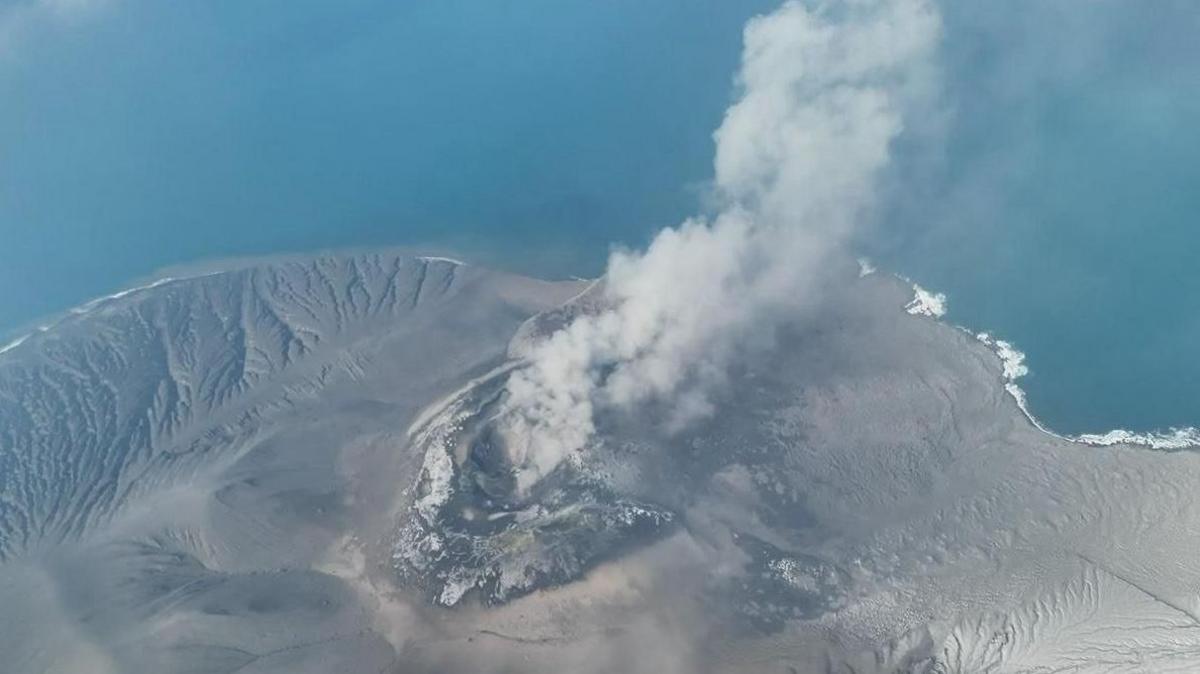
The recent eruption of Anak Krakatau in Indonesia has provided a dramatic reminder of the effect volcanic activity can have on aviation. Volcanic ash from the eruption spread across the region, leading to the closure of eight airports and disruption to more than 1,500 flights. Jakarta’s main Soekarno-Hatta International Airport (IATA: CGK, ICAO: WIII) was among those affected, despite being more than 80 NM from the volcano.
For passengers, the immediate consequences are delays, cancellations and diversions. For pilots and student pilots, however, the eruption provides a real-world example of why volcanic ash is taken so seriously and how subjects such as meteorology, flight planning, aircraft systems and operational procedures come together in practice.
So, why can an eruption more than 80 NM from an airport bring flights to a halt?
Why volcanic ash is dangerous to aircraft
A volcanic ash cloud is very different from an ordinary cloud. Volcanic ash consists of extremely fine particles of rock, minerals and volcanic material which can be carried considerable distances by the wind.
For an aircraft, flying through a significant concentration of volcanic ash presents several hazards.
Ash can be abrasive. At high speed, particles striking an aircraft can damage windscreens, leading edges and other exposed surfaces. This is not simply a cosmetic problem. Damage to a windscreen, for example, could significantly reduce a pilot’s forward visibility.
Ash can also enter aircraft systems. Sensors and probes may be affected and contamination can create additional maintenance requirements.
For turbine-powered aircraft, one of the most serious hazards is the effect ash can have on the engines. Volcanic material entering a hot engine can melt and subsequently accumulate on internal components. This can disrupt airflow and combustion, potentially resulting in a loss of thrust or even an engine flameout.
The safest strategy is therefore straightforward: avoid volcanic ash.
Why an eruption can disrupt flights
An eruption does not automatically mean that every aircraft in the surrounding region must remain on the ground.
The effect depends on factors including the size and duration of the eruption, the altitude reached by the ash, the concentration of ash and, importantly, the weather.
Once ash enters the atmosphere, the wind determines where it travels. This means the affected area may extend far beyond the volcano itself.
Airlines and flight planners may therefore have to:
- reroute flights around affected airspace
- delay departures
- change cruising levels
- divert aircraft to alternative aerodromes
- cancel flights where a safe and practical route is unavailable
This explains why passengers can experience disruption even when their departure or destination airport is nowhere near the eruption.
Wind matters
For student pilots, volcanic ash provides a particularly useful real-world example of why understanding upper winds matters.
An ash cloud does not remain stationary above a volcano. Its movement is influenced by atmospheric conditions at different levels, and the wind direction and speed at altitude may be very different from the wind experienced at the surface.
Forecasting therefore becomes essential.
Specialist organisations monitor volcanic activity and provide information to the aviation industry. Pilots and operators use the relevant warnings, forecasts and operational information to determine whether a route could be affected.
This is the same principle that applies throughout flight planning: conditions along the entire route matter, not just the weather outside the departure aerodrome.
What would a pilot do?
Imagine you are preparing for a flight and volcanic ash has been forecast close to your planned route.
The solution is not simply to look out of the window and decide whether the sky appears clear.
The pilot must obtain the appropriate pre-flight information and assess whether the flight can be conducted safely. Depending on the circumstances, this could mean changing the route, delaying the flight or not departing at all.
For an airline operation, the decision involves a much wider system. Flight crews, dispatchers, meteorological services, air traffic control (ATC), airport operators and other organisations may all contribute to keeping aircraft away from hazardous areas.
For a student pilot, there is an important lesson here: good decision-making often happens before the engine has even started.
Can pilots see volcanic ash?
Not reliably.
A dense ash plume may be visible, particularly close to an eruption and during daylight. However, ash can become difficult to distinguish from ordinary cloud, particularly at night or when dispersed over a large area.
That is one reason pilots should not depend on visual identification as their primary means of avoiding volcanic ash.
The same principle appears repeatedly during flight training. What a pilot can see from the cockpit is only one part of the available information. Safe planning means building a wider picture using forecasts, reports, notices and other appropriate operational information.
A meteorology lesson happening in real time
Events such as an Indonesian volcanic eruption may initially seem far removed from everyday flight training. In reality, they demonstrate why theoretical knowledge matters.
Meteorology is not simply about passing an examination. Wind direction determines where hazardous material travels. Atmospheric stability can influence how material disperses. Flight planning determines whether an alternative route is practical. Aircraft systems knowledge helps pilots understand why contamination presents such a serious risk.
The subjects studied during ground school overlap because real-world aviation problems overlap too.
A volcano does not care which chapter of the ATPL syllabus you are studying.
What student pilots can learn from an eruption
When significant volcanic activity makes the news, try looking at it as a pilot rather than simply as a passenger.
Consider where the volcano is located and which routes pass nearby. Look at the wind at different levels and think about where an ash cloud could travel. Consider which aerodromes might be affected and what alternatives would be available.
Most importantly, think about the decisions that have to be made when conditions become uncertain.
Flying is not about finding a way to complete a flight at all costs. It is about identifying hazards, understanding the available information and making an appropriate decision.
Volcanic ash is an extreme example, but the principle is relevant every time a pilot prepares to fly.
Bringing theory into the cockpit
A volcanic eruption in Indonesia can affect aircraft many miles from the volcano and passengers travelling to destinations far beyond the immediate area. It is a reminder of just how interconnected aviation, meteorology and flight planning are.
For students working towards a pilot licence or studying ATPL theory, events like these are worth following. They turn subjects that can seem abstract in a textbook into genuine operational decisions.
Understanding why flights are rerouted or cancelled is part of learning to think like a pilot.
And sometimes, the safest flight is the one that takes a different route – or does not depart at all.