
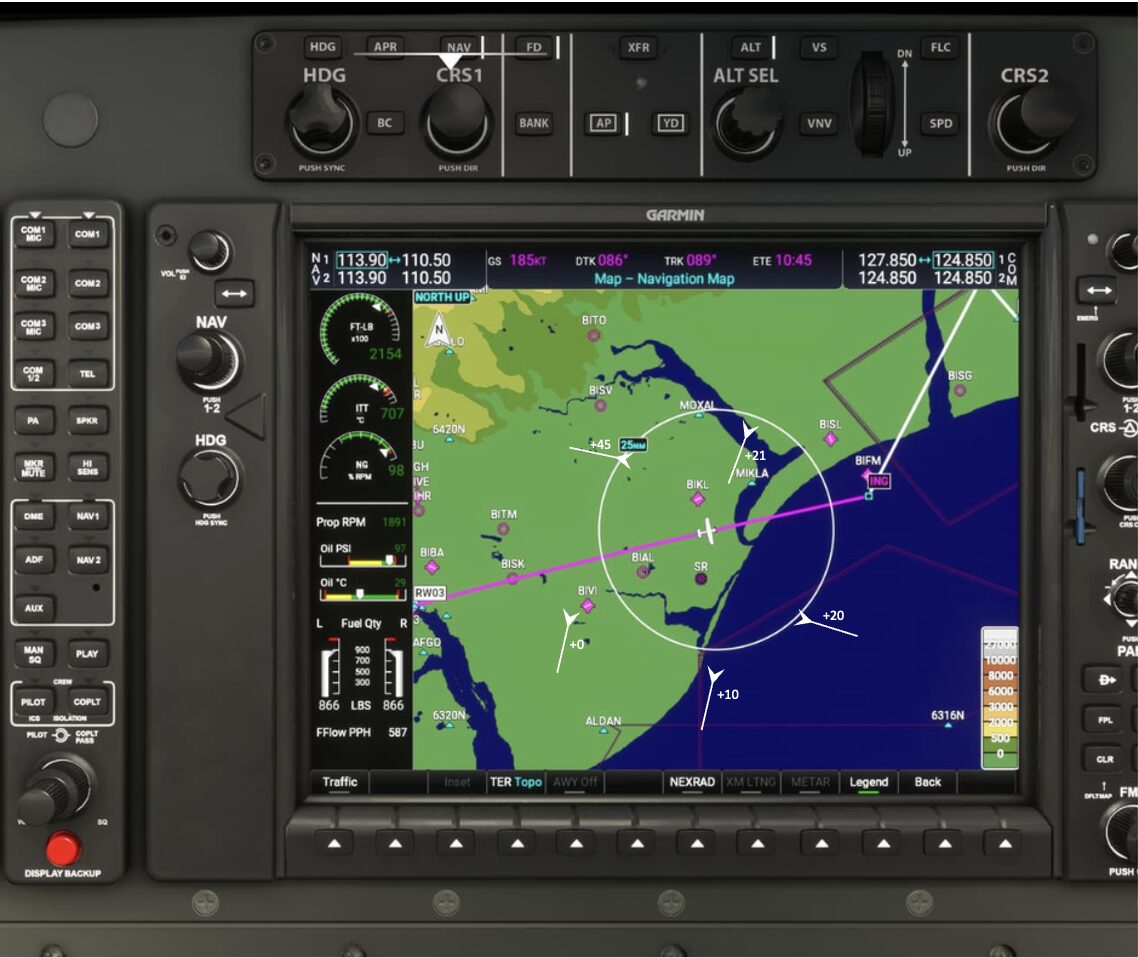
 Last week we explored a simple question: Is “see and avoid” still enough in modern airspace?
Electronic Conspicuity (EC), whether the regulated and standardised Secondary Surveillance Radar (SSR) Mode C or S, and Automatic Dependent Surveillance – Broadcast (ADS-B) systems or the proprietary FLARM, PilotAware and FANET+, adds a layer of cooperative visibility that traditional visual separation cannot always guarantee. As traffic density increases, that additional layer becomes harder to dismiss.
This week, that debate moved from theory into legislation.
After a successful passage through a unanimous vote in the U.S. Senate at the end of 2025, the U.S. House of Representatives failed to meet the two-thirds majority required and thus rejected a proposal to mandate ADS-B In, equipment that allows aircraft not just to broadcast their position, but to receive traffic information from others. The proposal had strong support from safety advocates following a fatal mid-air collision in 2025 but was subject to last-minute objections from the Pentagon.
The technology exists. The capability is proven. Yet the mandate did not pass.
Why?
Because safety technology doesn’t exist in isolation. It sits at the intersection of cost, proportionality, regulatory philosophy and operational practicality.
Mandating equipage across a diverse aviation community, from light GA aircraft to business jets and including military hardware, is not a simple decision. Questions arise:
- Is the risk profile high enough to justify a universal mandate?
- Should adoption be encouraged rather than enforced?
- What level of interoperability is required before a mandate makes sense?
- Who bears the cost?
- Are there any military operational security risks?
These are not technical questions. They are policy decisions.
And this is where Electronic Conspicuity becomes more than an avionics discussion.
From a training perspective, this is important. Today’s CPL and ATPL students will graduate into an environment where equipage is mixed, surveillance capability varies, and regulatory approaches differ between states. Understanding EC isn’t just about knowing how ADS-B works; it’s about understanding how cooperative surveillance fits into the broader airspace system.
The debate in the United States highlights something fundamental: we are in a transition phase. Visual separation remains central. Electronic visibility is increasingly available. But the industry has not yet fully agreed on where voluntary adoption ends and mandatory safety baseline begins.
The real question may not be whether Electronic Conspicuity improves safety. The data increasingly suggests it does.
The question is when and under what circumstances improvement becomes an expectation rather than an option.
And that conversation is far from over…