ATPL(A) course overview and modules
Maths and Physics Refresher
As you might expect, ATPL studies require students to have a solid understanding of maths and physics. So before you start your ATPL studies, we provide a maths and physics refresher module to give you a solid platform from which to learn. This module is completed in our computer-based training software – and there are no exams at the end of the module.
Knowledge, Skills and Attitudes (KSA)
Also included with your course material is a ‘Knowledge, Skills and Attitudes (KSA)’ section. It’s a short module designed to help you thrive with your ATPL studies and beyond, addressing key career skills such as communication, workload management, leadership and situational awareness.
We divide the 13 ATPL theory subjects into three modules.
ATPL(A) Module 1:
- 022 – Instrumentation
- 061 – General Navigation
- 050 – Meteorology
- 040 – Human Performance and Limitations
ATPL(A) Module 2:
- 062 – Radio Navigation
- 021 – Aircraft General Knowledge: Airframe and Systems, Electrics, Power Plant and Emergency Equipment
- 010 – Air Law
- 033 – Flight Planning and Flight Monitoring
- 090 – Communications
ATPL(A) Module 3:
- 070 – Operational Procedures
- 081 – Principles of Flight (Aeroplane)
- 032 – Performance (Aeroplane)
- 031 – Mass and Balance
Key features of our ATPL theory course
ATPL Distance Learning: study your theory anywhere
Our online ATPL(A) theory course gives you total control over when and where you study. Building flying hours, working full-time, or managing family life, our ATPL distance learning fits around your schedule so you can prioritise your life effectively.
ATPdigital makes complex aviation theory simple and fun. You get animations, diagrams, and quick quizzes that keep you engaged and can study online from anywhere. Even if you don’t have an internet connection, you can still study offline! When you get your connection back, all your progress will be saved without issue.
Better yet, our ATPL distance learning students commonly pass their exams on the first time round, just like classroom students do. With all the additional support, revision weeks, and practice questions, you’ll be prepared to pass your ATPL exams confidently.
ATPdigital: pioneering training software

Learning is more memorable when the course materials are engaging. That’s why we pioneered a computer-based training system called ATPdigital: interactive software that puts world-renowned ATPL theory tuition at your fingertips.
ATPdigital breaks your course into bitesize stages, guiding you through your studies with interactive diagrams, animations and explainers. You’ll receive pass quizzes at the end of each course section, and watch your knowledge grow with a dashboard overview of your course progression. There’s even an AI feature that will enable you to get fast answers to any questions you have about your learning.
ATPdigital is available for Windows and Mac OS PCs and laptops. There’s also an iOS app available for iPad. Once installed the software can be used offline allowing you to anytime, anywhere.
ATPdigital Duration
ATPdigital itself does not expire.
Once the software has been installed on a student’s device (PC, Mac or iPad), it will remain available and will continue to receive software and content updates. Access will normally only be affected if:
- the device fails or is replaced;
- the operating system changes to the point that ATPdigital is no longer compatible; or
- the app/software is deleted from the device.
IT Technical support is provided for 18 months, although we take a flexible approach to support requests received after this period.
Where a major syllabus change occurs, such as the transition from an old syllabus to a new syllabus, the updated syllabus content will be provided free of charge during the first 18 months. After 18 months, an upgrade fee will apply.
BGS Video Library: subject videos on demand
Access hundreds of hours of subject-based videos to help you revise, with an 18-month subscription to BGS Video Library. Presented by Bristol Groundschool’s team of expert instructors, our video library is regularly updated with new videos to help you get exam ready.
Revision weeks : perfect for exam preparation
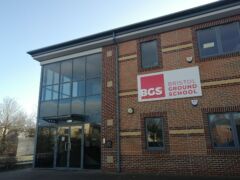
It’s no coincidence that most Bristol Groundschool students pass their exams first time. Our expert instructors will help you consolidate your learning, with exam-specific tests and recaps of key concepts in the syllabus.
Our revision weeks are available both online and in person (Modules 1 and 2 only) at our school in Clevedon, UK. They run every month for each module, giving you the flexibility to plan your studies around your schedule and ensure you can approach your exams with confidence.
Want the best of both? If you book an online revision week, you can join us in Clevedon for the first day and complete the rest of the week online. It’s a great opportunity to meet other students and experience face-to-face teaching without committing to the full week in person. Simply book the online course as normal and email [email protected] to let us know you’d like to attend the first day in person.
Additional Revision Weeks can be booked through our website.
BGS Question Bank: test your knowledge in targeted areas
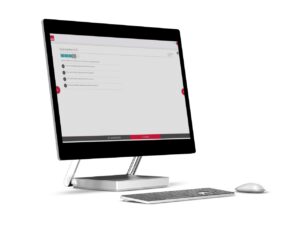
As a student of Bristol Groundschool, you will receive twelve months of access to BGS Question Bank – a regularly updated database of more than 15,000 exam-specific questions.
With instant answers and detailed explanations, it’s the perfect resource for testing your knowledge and preparing for your exams.
Filter questions by topic or revisit questions you’ve got wrong in the past to make your learning targeted and effective
Printed training manuals: learn flight theory page by page
As an optional extra, we can provide you with a complete set of printed manuals for all modules in your course.
If you are purchasing your manuals at the same time as a course you will receive them for a discounted price. Visit our online shop for more information.
Expert staff at your fingertips
Even when you’re learning remotely, we’re there to support you. Throughout your studies, our world-renowned instructors will be available to answer your questions and provide insight into your learning.
Course Requirements
Private Pilot’s Licence (PPL)
Before you start your ATPL theory course, you must have a PPL(A) issued to International Civil Aviation Organization (ICAO) standards. This is a mandatory requirement and you will be asked for your licence number when you purchase the ATPL course.
You will finish your PPL with 45 to 65 flying hours. The next flying course after your PPL is the CPL. It requires you to have logged 150 hours of flying time before you start. So you will need to build up your hours alongside studying for your ATPL theory if you intend to start your practical training soon after you have passed the ATPL exams.
Class 1 medical certificate
Before starting your commercial flight training, we recommend getting a Class 1 medical certificate. This is to help make sure you won’t be barred from obtaining a CPL on medical grounds. Your medical certification must be issued by the body governing your licence: i.e. the UK CAA or your EASA state’s equivalent. If you have a prescription from the opticians we also recommend you complete the UK CAA visual system form or your EASA state’s equivalent.
Visa requirements
Bristol Groundschool courses do not qualify for a student visa. Make sure you can enter the UK before applying for your course and exams. For further information on visas, visit the UK Border Agency website.
You don’t need a visa if you are studying with us remotely – and can complete all of your theory training online, without the need to visit us in person.
ATPL contact Hours
You need to complete a total of 650 hours of learning for your ATPL theory course. 10% (65 hours) of this must be live tuition. This can be completed by attending our revision weeks which are available to attend in person at our school in Clevedon, UK or online (excluding Module 3, which is offered online only). Please note our recorded classroom sessions do not count towards your live tuition requirement. The revision weeks are a mandatory part of our approved courses.
Ready to take your next step?
FAQs
What is an ATPL and what does it stand for?
An ATPL stands for Airline Transport Pilot Licence and is the highest form of qualification for a commercial pilot in the UK and Europe. This qualification enables pilots to serve as pilot-in-command (captain) of commercial aircraft used in airline transport operations and exercise all the privileges of both Private Pilot Licence (PPL) and Commercial Pilot Licence (CPL) holders.
In other words, an ATPL licence allows you to become an airline pilot, letting you work for companies like British Airways and Wizz. It’s the final qualification to becoming a full-fledged professional pilot! This licence represents the payoff from all the hard work studying and flying.
You may have also heard of “ATP” as a pilot qualification when doing your research. This is the USA version of the ATPL, and is essentially the same licence but for The States.
What are the general requirements for an ATPL?
The ATPL requires meeting comprehensive standards including:
- A minimum age of 21 years,
- Valid Part MED Class 1 Medical Certificate
- Substantial flight experience totalling 1,500 hours. Key experience requirements include
- 500 hours in multi-pilot operations
- 500 hours as PICUS or 250 hours as PIC
- Plus specific cross-country, instrument, and night flight minimums.
Training for an ATPL includes passing 13 theory examinations, completing flight training stages such as a CPL course and an Instrument Rating. Other courses such as the A-UPRT and APS/MCC are also commonly completed to form a Frozen ATPL licence. Once a pilot reaches the experience requirements above, the licence can be unfrozen and the holder can act as Captain on commercial flights.
How long does the ATPL(A) theory course take to complete?
Your ATPL theory course with Bristol Groundschool will take around six to eighteen months to complete depending on how much time you can dedicate towards your studies. During this time you can build up your flying experience and include a combination of distance learning and classroom work. There are thirteen exams to be passed for the EASA and UK CAA ATPL.
All lessons in ATPdigital must be completed before you can attend the revision course or take the examinations. Progress is recorded through a series of short quizzes for each lesson (which require 100% to pass), as well as larger progress tests to conclude each significant section. ATPdigital automatically sends us the results and our instructors are available throughout the process to provide all the support you need.
What’s the difference between an ATPL and CPL?
The main difference is that a CPL allows you to fly commercially in aircraft that weigh less than 5.7 tonnes and carry 9 or less passengers. An ATPL (or frozen ATPL) allows you to pilot aircraft larger than the CPL as a first officer and eventually Captain. A CPL licence allows you to gain employment in roles such as a flight instructor, survey pilot or charter pilot. ATPL licences are required to work as an airline captain, corporate pilot or any role which requires flying larger aircraft. For more information, read our full ATPL vs CPL guide.
How is ATPL(A) teaching delivered?
Training is divided into three modules, which must be studied in numerical sequence. The CBT and relevant revision week for each module must be completed before sitting exams, although with prior agreement you may be able to book your exams before completion of the CBT and revision week.
You will also need to attend a revision week – either online or in person – for each module of your training. ATPdigital lessons and tests must be completed for the module you are studying before revision course attendance.
How much does an ATPL cost?
ATPL training costs are different for each person and depend on how you choose to train. The costs include classroom learning, exam fees for 13 subjects, books and materials, review classes, and hands-on flying training. You’ll also need to pay for type rating training, additional courses (APS/MCC, A-UPRT), skill tests, and flight simulator practice.
For the theory, our ATPL(A) course costs £2,933 or £3,361 with manuals. This includes computer-based training software, 15 days of live tuition, video lessons, practice question tests, and instructor support. You’ll also need to budget for exam fees, a Jeppesen GSPRM manual, navigation tools (CRP-5, navigation protractor), as well as a calculator to complete your theory training.
How many subjects are there in the ATPL Theory?
The ATPL theory course has 13 subjects that cover everything you need to know about flying. These include Air Law, Aircraft General Knowledge, Mass and Balance, Performance, Flight Planning, Human Performance, Meteorology, General Navigation, Principals of Flight, and Communications .
These subjects are split into three groups that you study one after another, making sure you learn everything step by step. For each subject, you need to study the theory, practice what you learn, and pass an exam to show you understand it well enough to fly safely as a professional pilot.
Do you offer Question Banks for the ATPL Exams?
Yes, we provide access to BGSonline, our comprehensive question bank featuring thousands of up-to-date ATPL exam questions covering both EASA and UK CAA examinations. BGS Question Bank offers detailed explanations for each question, performance tracking tools to monitor your progress, and content that prioritises accuracy over quantity. This ensures you receive the best exam preparation support available.
Students enrolling in our full ATPL(A) course or Module 1 receive a complimentary 12-month BGS Question Bank subscription included in their training package. For those looking to purchase the question bank separately, we have flexible subscription options ranging from 1 month to 12 months.
We also offer a 3-day free trial so you can evaluate the quality of our materials before committing. For flexibility, BGSonline is accessible across all devices including Mac, PC, iPhone, iPad, Android, and Windows, enabling you to study anytime, anywhere.
What is a frozen ATPL and how do I unfreeze it?
A “Frozen ATPL” refers to the licence held once all training elements have been completed both theoretical and practical. A frozen ATPL is required to gain employment as an airline pilot and allows the holder to begin gaining experience as a first officer.
To unfreeze your ATPL, you need to reach 1,500 total hours including: 500 hours in multi-pilot aircraft operations, 250 hours as Pilot in Command (or 100 PIC with 180 PIC under supervision), 200 hours cross-country flight time (100 as PIC), 75 hours instrument flight time, and 100 hours flying at night. Once you have reached the hour requirements, you will need to complete an ATPL skills test in a simulator to unfreeze the licence. We have a full guide on how to unfreeze your ATPL if you need more information.
What’s the difference between Integrated and Modular ATPL courses?
The main difference is that integrated training involves full-time training from no experience to ATPL completion, while modular training lets you complete stages step-by-step at your own pace. Modular ATPL training lets you complete PPL, CPL/IR, and ATPL theory one at a time while fitting around work and personal responsibilities. Modular training can also be significantly cheaper.
Unlike integrated programs that need full-time commitment, modular training gives you schedule flexibility. This is perfect for career changers and working professionals, as you can learn at your own pace while getting the same high level of training. We have a full guide on the differences between integrated and modular training on our website if you need more information.
How do I take my exams?
At the end of each module, you can sit the exams associated with the module you are studying. There are a total of thirteen exams and you will have a maximum of six sittings to pass all of them, with no more than four attempts at any one subject.
You can sit your exams with us here in North Somerset. We are an approved examination centre for both UK CAA and Austro Control (EASA) exams. Alternatively, you can sit EASA exams in any EU member state and UK CAA exams at any UK CAA exam centre.
Bristol Groundschool students are given priority when booking Austro Control exams at our school. The booking system is released to non-BGS students closer to each exam sitting date. If you are not sure whether to select a UK CAA or EASA course, have a look at our webpage about the UK leaving EASA.
Exam fees are not included in the course cost. The UK CAA exams can be booked via the CAA website. Austro Control exams if sat at Bristol Groundschool can be booked directly through us.